
The Body Keeps the Score
The Profound Influence Our Nervous Systems Have On… Everything
There’s a quote that’s been living in me lately:
“Our capacity to destroy one another is matched by our capacity to heal one another. Restoring relationships and community is central to restoring well-being.”
– Dr. Bessel van der Kolk, The Body Keeps the Score
I first read The Body Keeps the Score in 2018, and it remains one of the most influential books I’ve ever picked up. Until then, I wasn’t fully aware of the profound role our nervous system plays in how we experience the world—and I certainly didn’t realize that my own nervous system had probably been dysregulated for most of my life.
The book helped me begin to recognize trauma not just as something that happens to us, but as a set of coping mechanisms and patterned responses that form inside us when we’re overwhelmed. These responses are not merely psychological—they’re physiological. The imprint of a traumatic experience can live on in the body, long after the event has passed. And without realizing it, we can end up interpreting the present moment through a nervous system shaped by the past.
The hard part is: we usually can’t see that it’s happening while we are in it. When we’re activated, we believe our interpretation is accurate. But our perception has been filtered—hijacked, even—by an inner landscape formed in a different time, under different conditions. In those conditions we likely had fewer choices and this reaction was the most intelligent response available under the circumstances. But that isn’t necessarily true anymore.
This is what it means when people say: we don’t experience the world as it is; we experience the world as we are.
One imprint of trauma is the loss of curiosity and connection. Instead of trying to understand people who see the world differently, we may dehumanize them. We may hold them at arm’s length or try to control them because it feels safer. We might lash out. Or freeze. Or shut down entirely. All of these can be trauma responses rooted in the limbic brain—wired into our survival circuitry.
And the trouble is, when these patterns are playing out, we often believe we’re just “being rational” or “telling the truth.” We think: I’m right. There’s something wrong with ‘them’.
Sound familiar?
This dynamic is all around us right now. And in many cases, it seems to be mistaken for what leadership—or even democracy—is supposed to look like. But it’s not. Unavoidable chaos is part of life. But avoidable chaos often comes from trauma—and it perpetuates more trauma in turn.
Still, trauma isn’t the whole story.
Because while trauma spreads (you’ve probably heard the phrase: “hurt people hurt people”), healing spreads too.
Our nervous systems are not isolated. They’re relational. Which means nervous system regulation, emotional maturity, and relational repair aren’t just personal practices—they’re leadership practices.
When we’re regulated, we gain access to the parts of our brain capable of perspective-taking, collaboration, and creative problem solving. We’re able to stay in connection even in disagreement. We can understand that different people may have different views. We can assess real threats without projecting old ones onto the present. And we can work together for mutual solutions that meet both of our needs — even if our needs are different. And when we’re in that state—we become less likely to cause harm, and more likely to help repair it.
If The Body Keeps the Score has impacted you…
If you’re just starting to explore the science of trauma or wondering how emotional regulation might shift your experience of leadership…
If you’ve been doing nervous system work and are seeing things change in your relationships, your work, or your worldview…
I’d love to connect.
I’d love to hear.
I’d love to keep learning.
Practice
There are many practices to support our nervous systems. One of my favorite practices to bring me back into my body so that I feel a greater sense of inner safety is something called a healing head hold. I’m linking to a short YouTube video that shows this technique: Healing Head Hold.
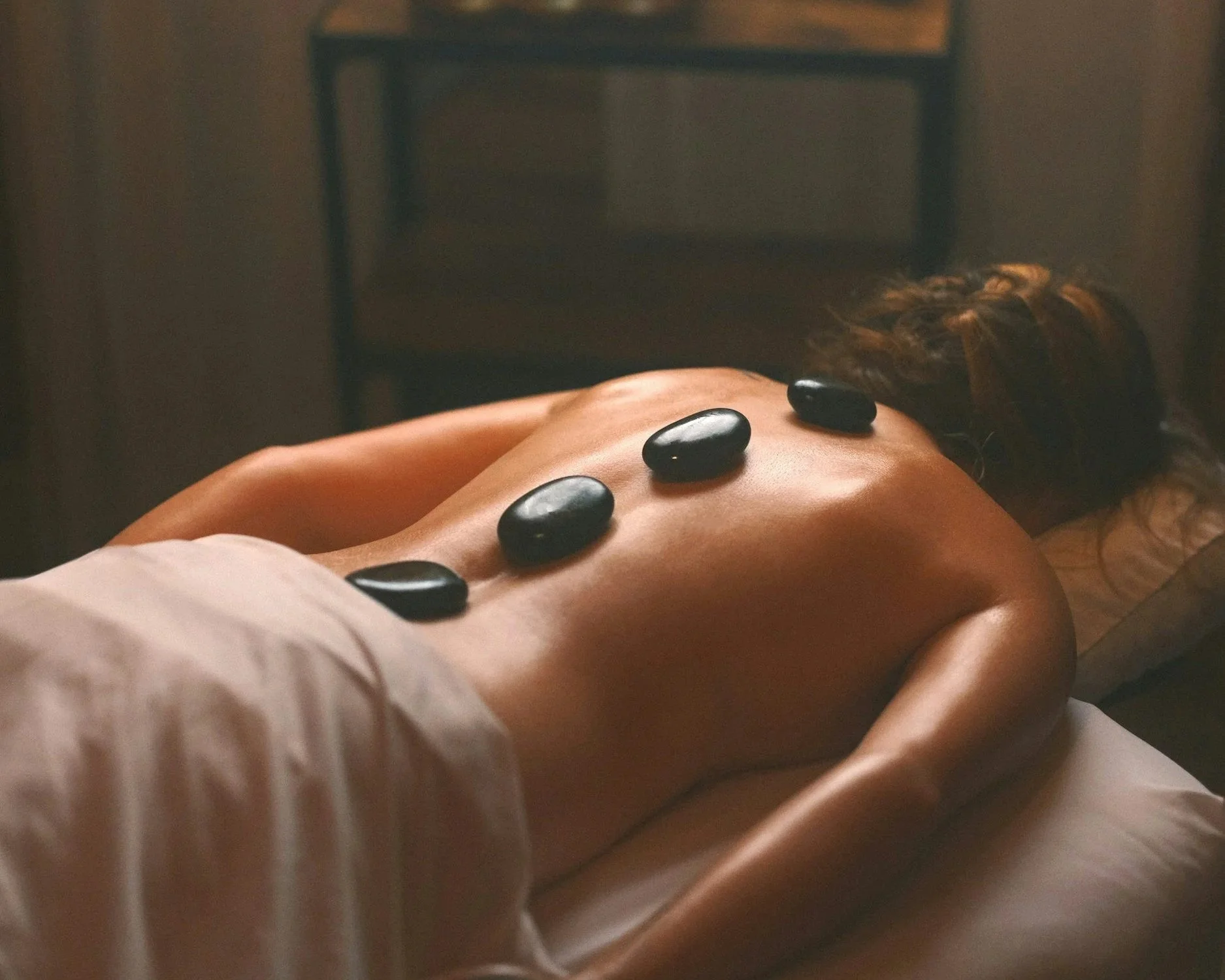
“Our capacity to destroy one another is matched by our capacity to heal one another. Restoring relationships and community is central to restoring well-being.”
– Dr. Bessel van der Kolk, The Body Keeps the Score
__
Julie Bauch is a deep transformational coach who supports individuals, leaders, groups, and organizations. Her work draws from neuroscience, wisdom traditions, somatic healing practices, Integral Coaching®, the work of Thomas Hübl, and a deep commitment to inner and outer coherence.
